Dress Codes on Indian Wedding Invitations: How to Word Them
How to word a dress code for haldi, mehendi, sangeet, wedding and reception, with sample lines, colour ideas and gentle notes for travelling guests.
Ask any guest what they worry about before an Indian wedding and the answer is rarely the gift. It is the clothes. Five events, three days, a suitcase that has to close, and a quiet fear of being the only person in pastels at a night of deep reds.
A dress code line takes that worry away in a dozen words. Written well, it does not feel like a rule. It feels like the family leaning over and saying, here is what will make you comfortable. This note is about how to write those lines for each event, where to put them, and how to suggest a colour without sounding strict.
Why guests are grateful for a dress code
Family and close friends usually know what to wear. The dress code is really for everyone else: college friends, colleagues, neighbours from another state, and especially guests from overseas or friends who have never been to an Indian wedding.
For those guests, the questions are real. Is white acceptable? Will a suit look too plain at the sangeet? A single line answers most of them before they ask, and saves you many WhatsApp messages in the wedding week.
There is a quieter benefit too. When most guests follow a loose palette, the photographs hold together.
Where the dress code belongs
Keep it off the main invitation. The first card carries the names, the blessing and the wedding itself, and a line about colours sits awkwardly beside a shloka. The right home for dress codes is the events card, where each function already has its own date, time and venue. A short line under each one reads naturally and is easy to find later.
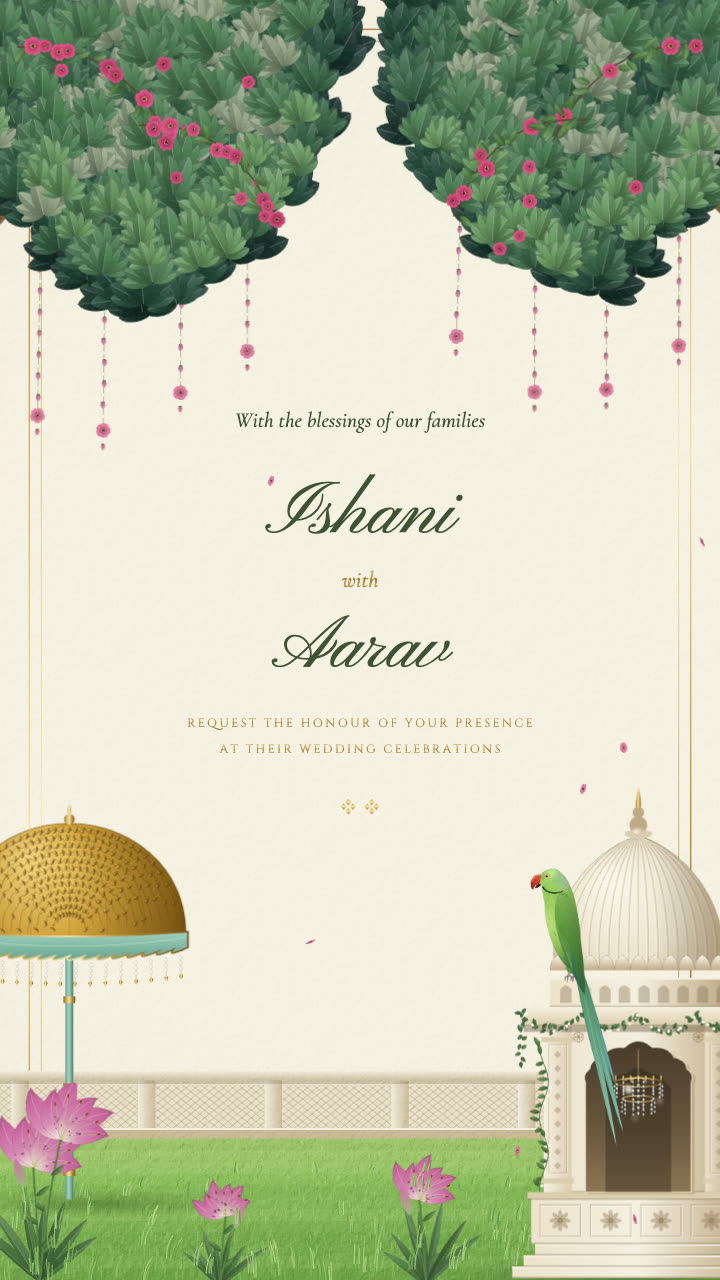 Seen hereBahaarWedding invitation
Bahaar is a good example of how a set divides the work. It is a painted palace garden with flowering trees, hanging bud strings, a gold chhatra and a carved sandstone chhatri with a crystal chandelier, while a parrot keeps watch. It comes as three cards: invitation, events and thank you. The invitation stays uncluttered, and the events card has room for a colour note under each function.
If you are sending separate cards for the haldi, mehendi and sangeet, put the dress code on each one, near the bottom, after the time and place. Our note on what to include on a digital wedding invitation covers the rest of what belongs on that card.
Haldi: yellows, whites and clothes you do not mind ruining
The haldi is the one event where guests need a practical warning as much as a colour. Turmeric stains, and someone will be laughing with a handful of it. Yellows and whites are the natural choice, and many families add a gentle line about old clothes.
Haldi: please come in yellow or white, and wear something you will not miss if it turns gold.
Morning haldi in the garden. Soft yellows, whites and flat shoes, as the lawn may be damp.
Wear your oldest kurta in your happiest yellow.
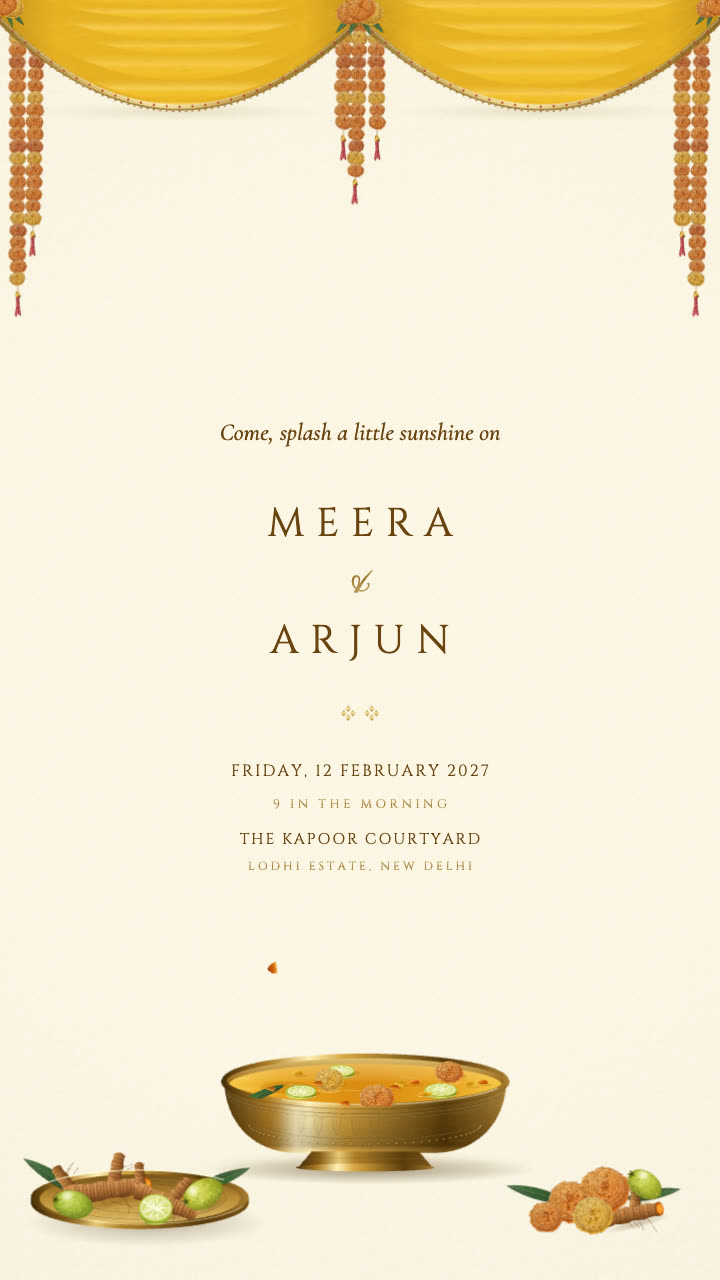 Seen hereSnaanHaldi invitation
Snaan suits a haldi card that carries a colour note, because the whole scene already sits in that palette. Under a swag of yellow silk hung with marigold strings, marigolds, petals and halved limes float and slowly turn in a brass urli of turmeric water, beside a plate of fresh turmeric root and limes. It opens with a shower of petals and comes as three cards. See more in our haldi collection.
Mehendi: greens, pastels and something easy to sit in
The mehendi is long and mostly seated. Guests will be on cushions and low chairs for hours, holding out their hands while the henna dries. Greens are the familiar choice, pastels work beautifully in daylight, and comfort deserves a mention.
Mehendi: greens and soft pastels, loose sleeves, and an afternoon with nowhere else to be.
Wear a shade of leaf or mint, and short sleeves if you would like henna up to the elbow.
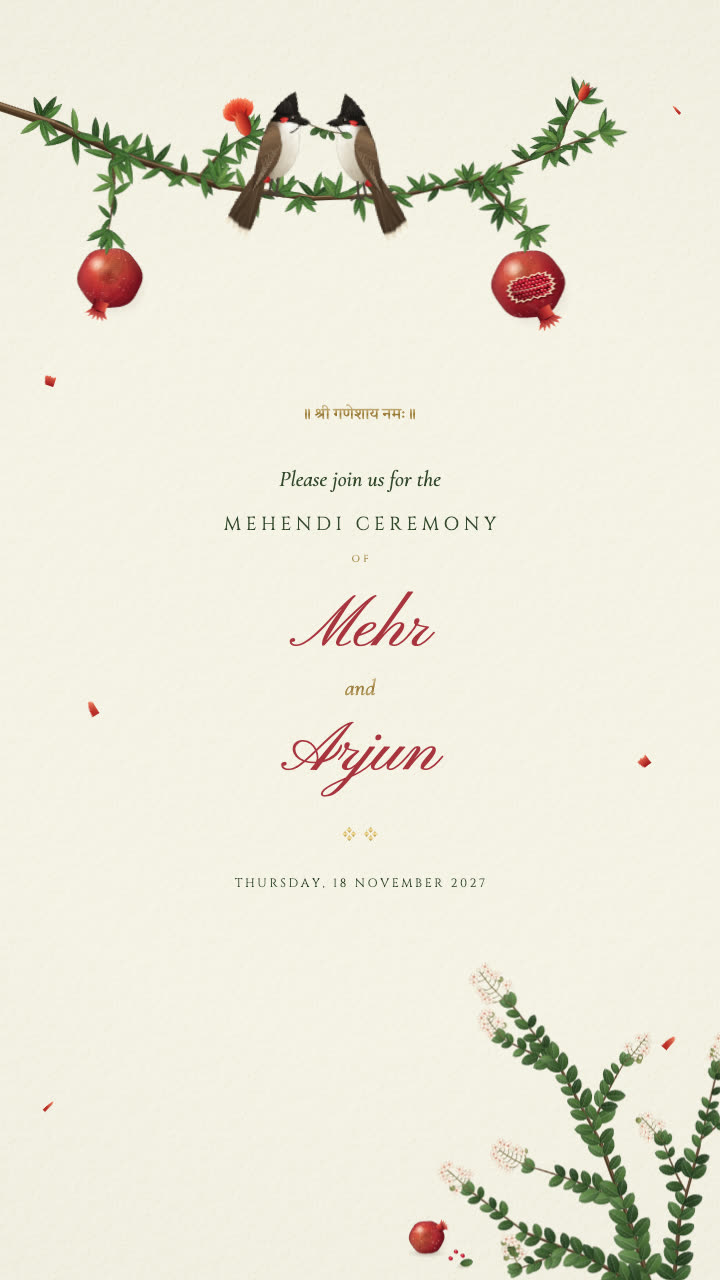 Seen hereBulbulMehendi invitation · Punjabi
Bulbul sets the tone well for a green and pastel mehendi. Two red-whiskered bulbuls sit on a fruiting pomegranate branch, and one has brought a sprig of fresh henna to hand to its mate beside a split pomegranate. It has two cards, invitation and details, so the dress code sits on the details card with the time and venue. It was drawn with Punjabi families in mind, and you can browse the full mehendi collection.
Sangeet: festive, glamorous or somewhere in between
The sangeet is where guests most want to dress up and most fear getting it wrong. Some families want sequins and statement jewellery. Others want a relaxed evening in kurtas. Say which one you mean, and if people will be dancing, mention shoes.
Sangeet: come festive. Sparkle is welcome, and so are shoes you can dance in.
Glamorous Indian evening wear. If you have been saving something with a little shine, this is the night.
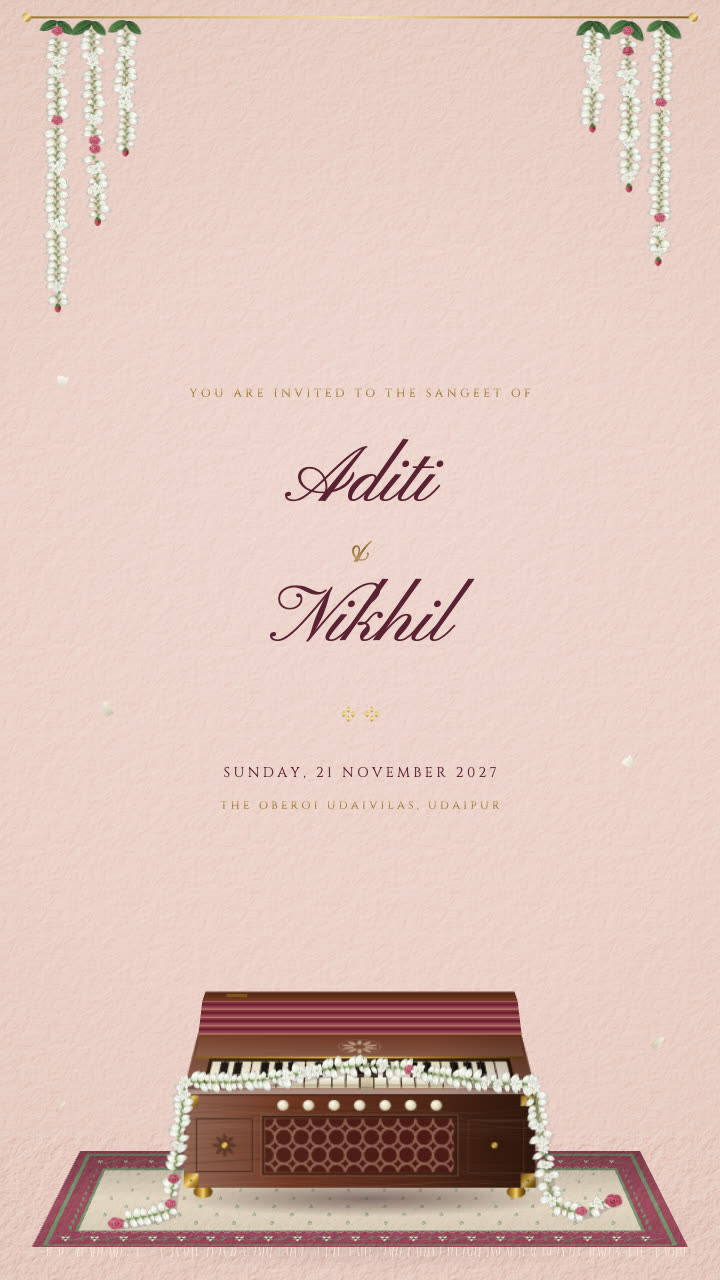 Seen hereSargamSangeet invitation
Sargam works well for a family that wants elegance more than glitter. In dusky rose and ivory, a harmonium plays as if by an unseen hand, its bellows breathing and keys gently dipping while a string of mogra slips across them and jasmine petals drift down. It opens with a leaf reveal and has three cards. More ideas in the sangeet collection.
Wedding and reception: traditional, then evening formal
For the wedding itself, most guests already expect to dress traditionally, so a light touch is enough. The useful thing to say is anything unexpected: a colour to avoid, or a ceremony where heads are covered.
Wedding: traditional Indian attire. We would love to see you in your festive best.
Traditional wear, please. Our ceremony is in a gurdwara, so do carry a scarf or dupatta to cover your head.
The reception is usually the evening event, more formal and more open. This is where Indo-western outfits, suits and gowns sit comfortably beside saris and sherwanis, and the card should say so.
Reception: black tie or Indian formal, whichever you feel most yourself in.
Evening dress. Indo-western is perfect, and so is your grandmother's Banarasi.
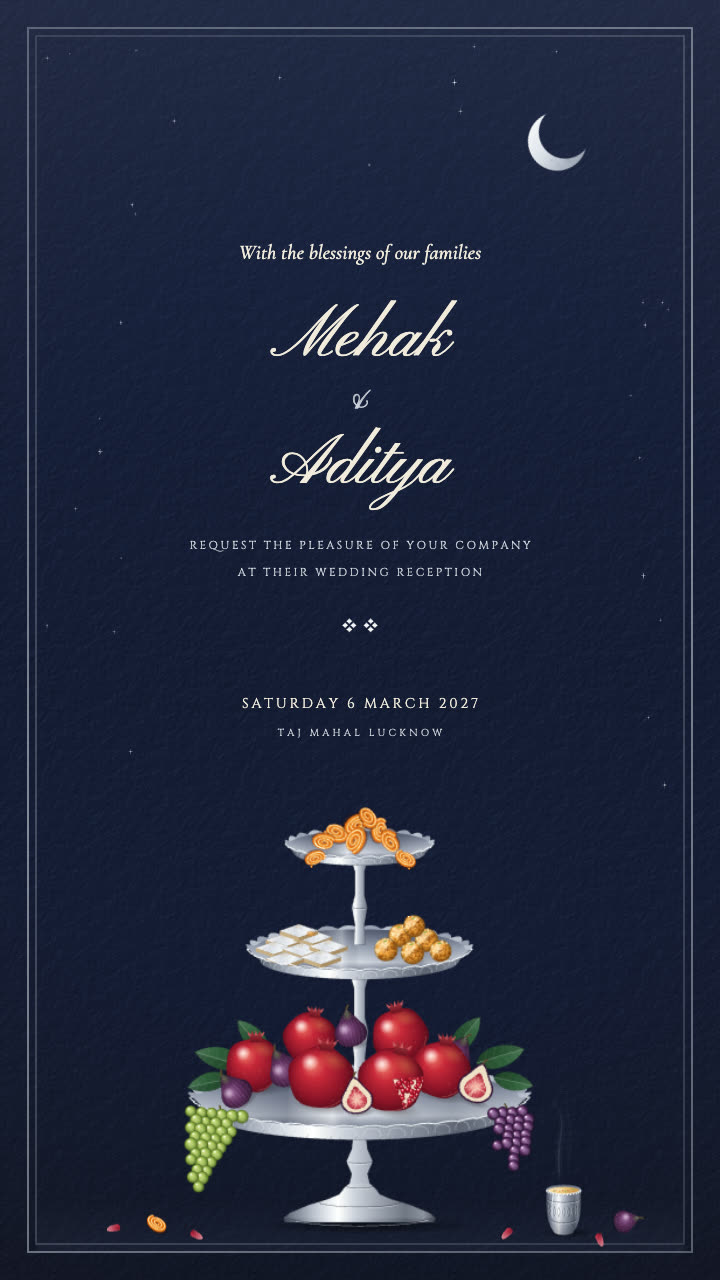 Seen hereVarqReception invitation
Varq is a reception card in midnight and silver, which already hints that this is a formal evening. A tall silver stand of pomegranates, figs, grapes, kaju katli and jalebis glistens on a dark night, the syrup slowly dripping onto the mithai, the silver varq catching tiny glints and a kulhad of kesar doodh sending up a curl of steam. Three cards. Our post on engagement and reception invitations has more on wording the reception card itself.
Suggesting a colour kindly, and planning for the weather
The difference between a warm dress code and a bossy one is usually a single word. A few habits help:
- Invite rather than instruct. "We would love to see you in green" reads very differently from "Green only."
- Give a family of colours, not a single shade. "Pastels" or "jewel tones" leaves room for what people already own.
- Offer an easy way out. Many guests will not buy a new outfit for one afternoon. A line such as "anything light and comfortable is perfect" tells them that is fine.
- Say what to avoid, gently and only if it matters. If you would prefer guests not to wear all black or all white, say it once, kindly, on the events card.
- Keep it to one line per event. If it needs a paragraph, it has become a brief.
Guests flying in pack every outfit at once, so tell them about the place, not just the colours. A December evening in Jaipur is cold after sunset. A lawn in Goa is warm and humid. A mehendi on a terrace in summer needs fabrics that breathe.
The sangeet is outdoors and evenings are cool in December. A shawl or jacket over your outfit will be welcome.
The haldi is by the pool, in the afternoon sun. Light cottons and sunglasses recommended.
For friends who have never worn Indian clothes, a reassuring line goes a long way: "Not sure what to wear? Message us and we will happily help." Our guide to destination wedding invitations has more on what travelling guests need from the events card.
Ordering your events card
Every Taarikh invitation is illustrated in our studio and sized at 1080 by 1920 for WhatsApp and Instagram. Choose a design, send us your events, timings, venues and the dress code lines you would like on WhatsApp, and we will send a proof within 48 hours, with two rounds of changes included. A still invitation is ₹5,000 and an animated one, delivered as a video, is ₹10,000. If you have an idea of your own, we can draw a custom design from scratch for ₹15,000, though we accept only a few of those each month.
 Next storyHow to Share Your Wedding Invitation on Instagram and WhatsApp Status
Explore the collection of luxury wedding invitations, or write to us on WhatsApp.